
FIFA World Cup 2026 Toronto Airbnb Hosting Guide: Maximize Your Airbnb Revenue

FIFA World Cup 2026 Toronto Airbnb Hosting Guide: Maximize Your Airbnb Revenue

This guide is written by Stayfinity, dedicated to Toronto Airbnb property owners, both new and existing, who want to grow their Airbnb revenue during the FIFA World Cup 2026. It covers match dates, Airbnb pricing, local Short-Term Rental regulations, and what the Paris 2024 Olympics taught us about supply risk. All data referenced here comes from the BMO Field official match schedule, Airbnb’s FIFA World Cup 2026 New Host Reward program, and a Deloitte study commissioned by Airbnb via Destination Toronto.

FIFA World Cup 2026 Toronto Airbnb Hosting

Key Facts at a Glance: FIFA World Cup 2026 Toronto

Metric Detail
Number of matches at BMO Field 6
Match dates June 12, 17, 20, 23, 26 and July 2
July 2 match type Round of 32
Estimated visitors to Toronto 146,000
Projected average host earnings (CAD) $2,700
New host incentive (CAD) $1,015
Incentive deadline July 31, 2026
Municipal Accommodation Tax 8.5%
New host registration link airbnb.ca/e/fifa-new-host
Sources: BMO Field official match schedule; Airbnb FIFA World Cup 2026 New Host Reward program; Deloitte study commissioned by Airbnb via Destination Toronto.

How the World Cup Will Affect the Toronto Rental Market and FIFA Accommodation Demand

BMO Field will host six matches between June 12 and July 2. FIFA accommodation demand peaks on match nights and the night immediately before each match. These are the dates that matter most for your nightly rate adjustments.

Hotels have limited capacity to absorb this demand. Downtown Toronto hotels already show short-term rental availability on match weekends, and hotel rates are expected to rise during the tournament. When hotels are full or priced out of reach, travellers turn to Airbnb. International visitors actively search for entire-home listings close to transit, BMO Field, and the FIFA Fan Festival, which shifts a meaningful share of FIFA accommodation demand toward the Toronto rental market.

An estimated 146,000 visitors are expected in Toronto for the tournament. A Deloitte study commissioned by Airbnb projects that the average host could earn approximately $2,700 CAD across the tournament period, making this a significant Airbnb revenue opportunity for prepared hosts.

Toronto Short-Term Rental Regulations Every Airbnb Hosting Operator Must Know

Toronto operates one of Canada’s most clearly defined short-term rental frameworks. Non-compliance can result in fines and delisting. Confirm the following before you publish your listing:

  • Principal residence requirement: Short-term rentals must operate from the host’s principal residence only. Investment properties do not qualify.
  • Short-Term Rental registration number: A valid City of Toronto short-term rental registration number must appear on your listing.
  • Municipal Accommodation Tax: Hosts must collect and remit the 8.5% MAT on all bookings.

Airbnb hosting operators who skip short-term rentals risk losing their listing before the tournament begins. For complete details, see our dedicated guide: Short-Term Rental Regulations in Toronto: 2026 Host Guide.

New Hosts: The Airbnb Incentive and Its Effect on the Toronto Rental Market

Airbnb is recruiting new entire-home hosts across FIFA World Cup 2026 host cities. In Toronto, eligible new hosts can receive $1,015 CAD for hosting their first guest by July 31, 2026.

Two requirements apply:

  1. You must register before publishing your listing.
  2. Your first guest’s stay must be completed by July 31, 2026.

Short-Term Rental and full eligibility details are available at airbnb.ca/e/fifa-new-host .

This incentive will increase supply in the Toronto rental market. More hosts entering at the same time means more competition. Price based on actual booking activity, not a fixed rate set months in advance.

Airbnb Pricing Strategy for the World Cup: How to Short-Term Rental Structure Your Rates

The most common mistake hosts make during major events is setting one high flat rate for the entire month. That approach ignores how demand moves across the calendar and results in missed bookings on slower nights and unrealized Airbnb revenue on peak ones.

A more effective Airbnb pricing Strategy:

  • Highest rates: The six confirmed match dates (June 12, 17, 20, 23, 26, July 2) and the night before each.
  • Moderate rates: Nights between matches. Some fans book multi-night stays to attend more than one game, so these nights carry real demand.
  • Two-night minimum on match weekends: This reduces single-night turnovers without blocking large short-term rental slots on your calendar.

Adjusting rates daily based on actual booking pace outperforms a fixed rate set weeks in advance. Dynamic pricing tools such as PriceLabs and Wheelhouse automate this by reading live demand signals and adjusting your rates accordingly.

Airbnb Pricing and the Paris 2024 Olympics: What It Means for Your Airbnb Revenue

Paris is the most relevant recent case study for hosts preparing for a major tournament.

Ahead of the 2024 Olympics, hosts raised prices sharply, and a large number of new listings entered the market at the same time. Supply grew faster than demand. Prices fell from their initial highs, and final average rates ended well below what many hosts had projected when they set their calendars months earlier.

The same risk applies in Toronto. Airbnb’s incentive program will bring new hosts into the market between now and July. If all of them set high fixed rates simultaneously, the outcome mirrors Paris, with Airbnb revenue falling short of expectations.

Reactive Airbnb pricing reduces this risk: set rates that respond to actual booking activity rather than anticipated demand fixed months in advance.

Airbnb Hosting Preparation Checklist for Existing Toronto Operators

If you are already active on Airbnb, four actions improve your position before June 12:

  1. Activate dynamic pricing: If you are not using PriceLabs, Wheelhouse, or Airbnb’s Smart Pricing tool, switch now.
  2. Update your listing copy: Mention proximity to BMO Field, nearest TTC or GO Transit access, and the FIFA Fan Festival. International guests search for these terms.
  3. Refresh your photos: Listings with current, well-lit photography consistently outperform those with outdated images in search results.
  4. Set a two-night minimum on match weekends: This reduces turnover costs and keeps your calendar efficient.

These steps apply whether you self-manage or work with a provider offering Airbnb Property Management in Toronto.

Why Airbnb Hosts Should Consider Hiring an Airbnb Management Company

Managing a listing during a major international event is operationally different from normal Airbnb hosting. Guest message volume increases. Check-in times vary. Turnovers happen on compressed timelines between same-day bookings. For hosts managing their property alongside other commitments, this is difficult to handle without service quality declining, which is exactly why many entire-home owners choose to hire a short-term rental management company in Toronto before the tournament rush hits. 

Working with an Airbnb management company transfers this operational load. At Stayfinity, our Airbnb management services in Toronto include:

  • Daily Airbnb pricing adjustments based on demand
  • Listing optimization and content updates
  • Guest communication from inquiry through checkout
  • Cleaning and turnover coordination

An Airbnb management company like Stayfinity is particularly useful for hosts who own entire-home properties, have multiple listings, or are entering short-term rentals for the first time during a high-volume period.

Conclusion: Capitalizing on Toronto’s Biggest Tourism Milestone

The FIFA World Cup 2026 isn’t just a historic sporting event for Toronto; it’s an unprecedented economic opportunity for local property owners. However, as the Paris 2024 Olympics proved, simply putting a listing online with a high price tag isn’t enough. Winning the tournament as a host requires reactive short-term rental pricing, flawless operational execution, and absolute compliance with Toronto’s short-term rental bylaws.

With 146,000 visitors arriving and hotels already hitting maximum capacity, the demand is guaranteed. Your success will come down to how quickly you can adapt to shifting booking signals and how seamlessly you manage the compressed turnovers between match nights.

Ready to Maximize Your Airbnb Revenue Without the Operational Headache?

Managing an entire-home listing during a massive international tournament is a full-time job. Between handling late-night guest messages from different time zones, coordinating rapid property cleanings, and constantly adjusting rates on PriceLabs or Wheelhouse, it’s easy to feel overwhelmed.

If you want to capitalize on Toronto’s booming rental market without the operational short-term rental, partnering with a dedicated local Airbnb management company like Stayfinity is the ultimate shortcut to maximizing your nightly rates. Contact us to learn how we can help optimize your rental income.

Frequently Asked Questions (FAQs)

Can I list an investment property for FIFA accommodation demand during the World Cup?

No. Toronto’s Short-Term Rental bylaw requires short-term rentals to operate from the host’s principal residence only. Investment properties are not eligible.
Yes. The 8.5% MAT applies to all short-term rental bookings in Toronto and must be remitted to the City.
The $1,015 CAD incentive requires your first guest’s stay to be completed by July 31, 2026. You must register before publishing your listing.
Yes. Matches continue through July 2. The Round of 32 match on July 2 is the final Toronto fixture and will generate its own demand spike. Multi-night bookings across the tournament period are also common, contributing to overall Airbnb revenue throughout the full window.

Look for a local operator with verifiable Toronto listings and transparent pricing. Our guide Why Hire a Short-Term Rental Management Company in Toronto outlines what to evaluate when choosing a provider.

Stayfinity is a Toronto-based short-term rental management company. This guide reflects publicly available information from the sources listed above and is updated as new information becomes available.
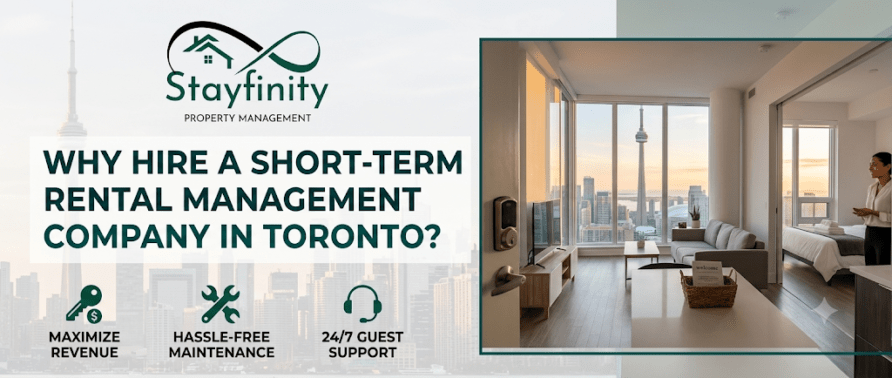
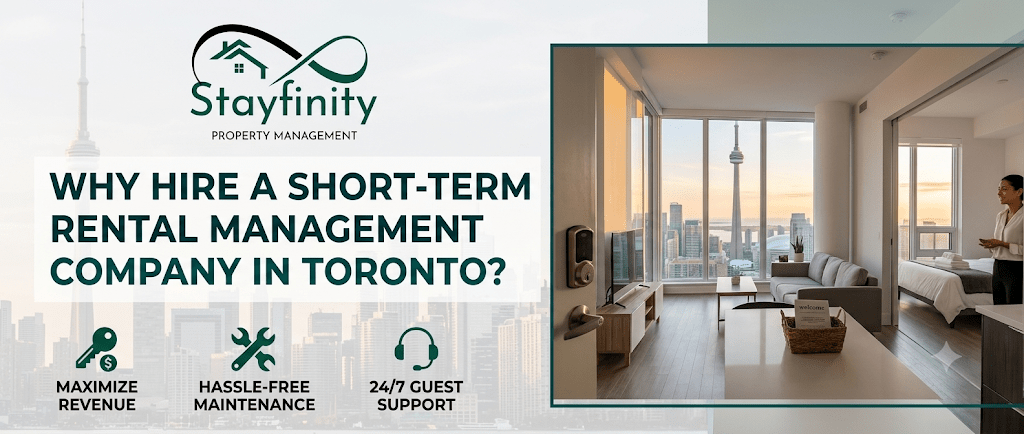
Why Hire a Short-Term Rental Management Company in Toronto?

Why Hire a Short-Term Rental Management Company in Toronto?

Owning a rental property in Toronto looks great on paper. Then the 2 a.m. lockout call happens. Or the guest who checks in and immediately complains about the sheets. Or the cleaner who cancels last-minute before a back-to-back booking weekend.

This is the part nobody warns you about when you list on Airbnb for the first time. Managing a short-term rental is essentially a second job, and not a small one.

Hiring a short-term rental management company changes that completely. The right team handles everything from pricing and guest communication to compliance and maintenance, while you collect the income without running the operation yourself.

Why Hire a Short-Term Rental Management Company in Toronto

1. Navigating Toronto's Bylaws and Taxes

Toronto does not make short-term rental hosting simple. You need to register your principal residence before taking a single booking, and the eligibility rules catch a lot of first-time hosts off guard. This is where short term rental property management becomes invaluable, especially short-term condo rentals that must comply with both city rules and building-specific bylaws.

Then there is the Municipal Accommodation Tax. Every booking carries an 8.5% MAT that you are required to collect and remit to the city. Miss a deadline, and the penalties follow.

A management company keeps all of this in order. They handle the registration process, track the tax obligations, and stay current as the rules shift. You stay compliant without having to read through city bylaws every few months to make sure nothing has changed.

2. Maximizing Revenue

Most hosts just set a nightly rate, check it now and then, thinking they’re doing great. Often, though, they’re missing out on extra cash. A dedicated short term rental property management service ensures your pricing is always working for you, not against you.

Professionals use dynamic pricing tools. These adjust rates based on actual demand, local rivals, city events, and seasonality. So, hosts could make more by staying updated and using the right tools. When a major festival fills up Toronto hotels, your rate reflects that. When things slow down, the right pricing strategy helps you maximize your Airbnb income in Toronto without leaving your calendar empty

On top of that, your listing gets proper photography, well-written descriptions, and placement across multiple platforms at once. That combination tends to produce booking numbers solo hosts struggle to match.

3. Saving Time and Energy

The first month of self-managing usually feels manageable. By month three, most hosts describe the same experience: it has quietly taken over their schedule. Professional short term rental management exists precisely to solve the problem.

Guest messages come in at all hours. Turnovers need coordinating. Something always needs attention right when you have other plans. It is not one big problem; it is the constant accumulation of small ones.

A management company absorbs all of that. Guest communication, cleaning coordination, check-in logistics, and post-stay follow-ups are all handled without needing your input on every detail. You stay informed on what actually matters and step back from the rest.

4. Stress-Free Maintenance

Short-term rentals go through more wear than most owners expect. Guests are not necessarily careless, but with new people arriving every few days, things break faster than they would in a long-term setup.

When something goes wrong mid-stay, the clock moves fast. A broken lock or a failing appliance is not something you can deal with tomorrow.

Short-term rental property management companies keep a network of reliable local contractors on hand for exactly these situations. The problem gets reported, someone gets dispatched, and you hear about it once it is sorted. No frantic searching for a plumber at 9 p.m. on a Saturday.

5. Professional Listing Optimization and Multi-Platform Marketing

There are thousands of short-term rentals listed in Toronto right now. A traveller comparing options at midnight is not spending long on any single listing. They move toward the ones that look polished, read clearly, and feel trustworthy before they have even booked. A skilled short term rental management company ensures your listing stands out.

Most self-managed listings simply do not hit that bar consistently. Professional management brings in proper photography, writes descriptions that actually perform in search, and handles Airbnb management in Toronto across Airbnb, VRBO, and Booking.com at the same time. The listing also gets updated regularly based on feedback and algorithm shifts, not just set once and left alone.

6. Interior Design and Property Positioning

Walk through two similar apartments in the same neighbourhood, and you will immediately understand why one charges more per night than the other. It rarely comes down to size or location alone. It comes down to how the space feels. This is especially true for short term condo rentals, where thoughtful staging can make a modest unit feel premium.

Good management companies either offer design guidance directly or point you toward people who know what works specifically for short-term rentals. Not full renovations, just the choices that actually move the needle: furniture that fits the space, consistent styling, quality linens, and the kind of small details guests photograph and mention in reviews. Get that right early and it pays back through better rates and stronger reviews for as long as you are renting.

Why Stayfinity Is the Smartest Choice for Short-Term Rental Management

Not all short-term rental management companies are built the same. Some spread themselves across dozens of cities until your property is just another listing in a massive portfolio. Others surprise you with fees you never agreed to. Stayfinity works differently. We focus exclusively on Toronto, handle everything from MAT remittance to guest communication to maintenance, and keep you informed without keeping you busy. Local owners feel that difference from the first month.

Get Started with Short-Term Rental Property Management in Toronto

If you are looking for short-term rental management in Toronto that actually delivers passive income, Stayfinity is ready to show you what your property could be earning. Contact us today and let’s get your rental working harder for you. 

Frequently Asked Questions (FAQs)

What does a short-term rental management company do?

A short-term rental management company handles everything involved in running your rental, guest communication, cleaning coordination, dynamic pricing, compliance with city bylaws, and maintenance. You collect the income; they do the work. 

Short-term rental management companies typically charge a percentage of your monthly rental revenue, with the rate varying based on the scope of services included. Full-service management covers everything from listing setup and guest communication to compliance and maintenance. Contact Stayfinity to get a clear breakdown of what’s included and what it costs for your specific property.

Yes, for most owners. A professional short-term rental management company typically increases your nightly revenue through dynamic pricing and higher occupancy while eliminating the day-to-day time commitment. The management fee is usually offset by what you earn back. 

Self-managing means you handle every booking, guest message, cleaning, and compliance requirement yourself. A vacation rental management company takes all of that off your plate and uses professional tools and local expertise to run your property more efficiently than most individual hosts can.

They use real-time dynamic pricing tools that adjust your nightly rate based on demand, local events, and competition, something most self-managing hosts don’t have access to. Combined with optimized listings and higher occupancy, the result is more revenue per month.

Short-Term Rental Regulations in Toronto: 2026 Host Guide

Short-Term Rental Regulations in Toronto: 2026 Host Guide

Toronto is among the cities which are highly visited in Canada, and short-term rental management has become one of the ways through which many people have been making money. There have been major changes on the regulation side, and the authorities in Toronto do not shy away from enforcing these laws. The hosts who will succeed are those who studied the law before listing and not after. It does not really matter if you are new at this or have been doing it for a while, but you wish to ensure everything has remained the same. This guide will tell you all about it in 2026.
Short-Term Rental Management Regulations in Toronto: 2026 Host Guide

What Counts as a Short-Term Rental in Toronto?

Any home or room rented for less than 28 consecutive days is a short-term rental. This covers entire homes, rooms, basement suites, and short-term condo rentals across all platforms, including Airbnb, VRBO, and Booking.com.

The Principal Residence Rule for Toronto Short-Term Rentals

You can only register the home you actually live in. The address on your driver’s licence, utility bills, and where you sleep most nights. That is your principal residence, and it is the only property you can register. One person, one registration, one address.

Short-Term Condo Rentals in Toronto: What to Check First

Speak to your building committee before going ahead. A lot of condo boards forbid all short-term condo rentals, no matter what the city allows, and this will override any permission granted by the city. If you are renting, be sure to check your rental agreement.

Is Registration Required for Short-Term Rentals in Toronto?

Yes, and there is no grace period; a short-term rental property that isn’t registered is a violation of the bylaws.

The 2026 registration cost will be $375, which is non-refundable and payable in advance. The yearly renewal rate is $390, also non-refundable. There is no automatic renewal for registrations, so listings need to be taken down once registration expires.

Documents Required to Register Your Short-Term Rental Property

This section covers everything you need to have ready before you start your registration application:

  • A valid Ontario driver’s licence or photo card showing the property address
  • At least two supporting documents proving principal residence, such as a utility bill or bank statement
  • Your short-term rental property type declared upfront: entire-unit or partial-unit
  • An emergency contact who can reach the property within hours
  • A credit card for the fee

Your registration number must appear on every listing. Platforms are legally required to verify these numbers and will pull listings that show an expired or missing one.

How Long Does Registration Take?

There is no fixed timeline, but most complete applications are processed within a few days to two weeks. Mismatched addresses or incomplete documents trigger manual review and slow everything down. Get your ID address and property address aligned before you apply, and do not list until your number is confirmed.

Toronto Short-Term Rental Night Limits

This section covers how night limits work and what they mean for each rental type:

Entire-Unit vs Partial-Unit Rentals

Entire-home rentals are capped at 180 nights per calendar year. Room rentals have no annual cap.

Entire-Unit Rentals

You rent the whole home while you are away. The 180-night annual limit is hard. Once you hit it, you are done for the year. This suits hosts who travel regularly and want to earn while they are gone.

Partial-Unit Rentals

You rent individual rooms while living in the property. Up to three bedrooms can be rented at a time with no night cap. You can only list one fewer bedroom than your home has total, so a three-bedroom home can advertise a maximum of two rooms.

The Loophole That No Longer Works

Some hosts used to switch between entire-unit and partial-unit once they hit the 180-night cap. The January 2025 updates closed that. You declare your rental type at registration and it stays locked until renewal.It is one of the bigger shifts in short-term rental management rules Toronto has made in recent years.

Municipal Accommodation Tax on Toronto Short-Term Rentals

The current MAT rate is 8.5%, temporarily raised from 6%, and runs until July 31, 2026. Every host must collect and remit this on bookings under 28 days.Airbnb and VRBO handle collection automatically, but you still need to file a quarterly MAT report with the city even in periods with no bookings. If you take direct bookings, you collect the tax yourself and remit it within 30 days of each quarter end. Stays of 28 days or more are fully exempt.

Annual Short-Term Rental Inspections in Toronto

Starting in January 2025, each licensed short-term rental will be required to undergo an inspection once per year. You must be there. The inspector will check your smoke detectors, carbon monoxide detectors, exit routes, and compliance with the building code. The emergency contacts and exit signs must always be conspicuously posted in the building.

Toronto Short-Term Rental Bylaw Changes: 2024 & 2025

These updates reshaped how short-term rental property management works.  Knowing them is essential whether you self-manage or use a service :

June 2024 Bylaw Updates

There were stricter definitions regarding short-term rental properties and principal residences. Emergency contact details and exit diagrams had to be provided within every rental. The revocation period was reduced to 10 days.

September 2024 Bylaw Updates

The city can now require two documents beyond your government ID to verify principal residence and can request an in-person interview. Annual inspections became formally authorised. If a registration is revoked, no new registration can be issued at that address for one full year.

January 2025 Bylaw Updates

Fees increased. Hosts must now declare rental type at registration, locking it in for the year. Partial-unit hosts face a new advertising cap of one fewer bedroom than the total in the home.

Fines for Non-Compliance

Any violation of bylaws leads to a fine amounting to up to $10,000 for individuals per violation. Repeated non-compliance with bylaws will lead to an individual being banned permanently from the registry. As of the end of 2025, there has been the implementation of a direct API link between the city and the platform.Working with a professional Airbnb property management in Toronto service is one way hosts stay on top of this.

Toronto Short-Term Rental Fees (2026)

Here is a full breakdown of what it costs to run a short-term rental in Toronto in 2026 whether you are self-managing or working with a short-term rental property management company:  

2026 Fees at a Glance


Fee

Amount

Notes

New Registration

$375

Non-refundable

Annual Renewal

$390

Non-refundable, subject to increase

Municipal Accommodation Tax

8.5%

Until July 31, 2026

Fine Per Offence

Up to $10,000

Individuals

Can You List Investment Properties as Short-Term Rentals in Toronto?

Investment properties do not qualify. If you do not live there, you cannot register it for short stays.

Mid-Term Rentals: The Legal Alternative

Any stay of 28 days or more falls entirely outside the short-term rental framework. No registration, no night cap, no MAT, no principal residence requirement. Mid-term rentals attract relocating professionals, healthcare workers, and families between homes. Fewer turnovers, less management, and a model that actually works for investors in Toronto right now.

Short-Term Rental Pre-Listing Checklist

Use this checklist to confirm your short-term rental is fully set up and compliant :

  • Property is your principal residence and matches your government ID
  • Registration confirmed and number displayed on all listings
  • Rental type declared: entire-unit or partial-unit
  • If entire-unit, nights tracked against the 180-night cap
  • Smoke and carbon monoxide detectors working, fire exits marked
  • Emergency contact info and exit diagrams posted inside the property
  • Condo building board has confirmed STRs are permitted
  • Quarterly MAT filing dates noted

Thinking About Short-Term Rental Management in Toronto?

At Stayfinity, we handle the full operational side of short-term rental management for Toronto hosts, from compliance and listing setup to guest communications and renewals. Get in touch, and we will show you exactly what hosting looks like in practice.

First-Time Airbnb Host Guide (2026): From Setup to First Booking

First-Time Airbnb Host Guide (2026): From Setup to First Booking

Maybe you have been thinking about it for a while. Maybe you just ran the numbers on what your spare room or investment property could bring in each month. Either way, if you are putting together your first Airbnb host guide for 2026, there are a few things worth knowing before you go live.

The platform has changed. Guest expectations have shifted. And in most markets, the gap between listings that book consistently and listings that sit empty comes down to a handful of decisions made right at the start. Whether you are looking for Airbnb hosting tips for beginners or trying to figure out how the whole system actually works, this guide walks you through what genuinely matters: the setup, the algorithm, the pricing strategy, the tech, and how to use your first 30 days to build the kind of review profile that keeps bookings coming in long after launch.

airbnb management toronto

Phase 1: Setting Up Your Space the Right Way

Spend any time on Reddit or Quora reading through guest complaints, and one word keeps showing up sterile. Not dirty. Not poorly located. Sterile.

Minimalism had a good run. For a while, it read as intentional and clean. But somewhere along the way, it became shorthand for a landlord who spent as little as possible, threw in some white towels, and hoped for the best. Guests are picking up on that now and saying so publicly. The listings doing well in 2026 feel warm, considered, and genuinely comfortable. Like someone actually thought about what it would be like to stay there.

Getting that feeling does not require a big budget. It requires a bit of intention.

Start with the windows. Horizontal blinds are one of the first things guests notice when they walk into a space, and they read as dated and impersonal. Blackout curtains with some texture to them photograph better and make a real difference for guests trying to sleep in. It is a straightforward swap that pays off quickly.

Sort the bedding next. A fluffy duvet, four pillows per bed split between firm and soft, and a folded throw blanket at the foot, that combination photographs well and genuinely feels good to sleep in. Thin sheets and two flat pillows will show up in your reviews faster than almost anything else.

Bring something living into the room. Real plants work great if someone can water them between stays. High-quality faux plants are just as effective in listing photos and require nothing from you. Either way, a bit of greenery makes a space feel inhabited rather than staged.

Every bedside table needs two things: a warm lamp and a charging port guests can actually find without moving furniture. A 2700K bulb creates a relaxed, comfortable atmosphere. A visible charging spot is the kind of small detail that shows up in five-star reviews more often than you would expect.

Phase 2: Understanding How the Airbnb Algorithm Works in 2026

One of the most useful Airbnb hosting tips for beginners that rarely gets talked about is this : the algorithm is not just looking at your review history. It is watching what you do every single day.

Airbnb’s search in 2026 works more like a credit score than a simple ranking system. It rewards hosts who are consistently active and converting views into bookings. Your history matters less than it used to. What matters now is what you are doing today.

Log in every morning and adjust something on your calendar. Even moving one nightly rate by a dollar is enough. It signals to the algorithm that you are engaged and paying attention rather than someone who listed their property months ago and walked away. Active listings get pushed up. Quiet ones slide down.

During your launch phase, aim to respond to every inquiry within 15 minutes. Response speed is now a direct ranking factor, and in those early weeks when the platform is still deciding how much visibility to give your listing, a slow reply can quietly hurt your predicted satisfaction score. Once you have reviews and momentum behind you, there is more breathing room. At the start, take that window seriously.

Write a proper caption for every photo in your listing. Most hosts skip this entirely. The ones gaining real traction in 2026 are writing descriptions like “ergonomic workspace with 500 Mbps fibre connection” or “blackout curtains for late sleepers.” Airbnb’s search now uses AI to match listings to specific guest needs, and those captions feed directly into that process.

Phase 3: Pricing It Right From the Start

Pricing is where a lot of first-time hosts trip up, and the most common mistake in 2026 is still the same one a low nightly rate paired with a high cleaning fee and a checkout chore list sitting on top of it.

Here is the reality. Guests now see the full price before they book. A nightly rate of fifty dollars, next to a two-hundred-dollar cleaning fee does not feel like a deal. It feels like a trick. People are talking about it in forums, calling it out in reviews, and most importantly, clicking away without booking. Your total price needs to feel honest when you add everything together, not just when someone looks at the nightly figure on its own.

If you are charging a professional cleaning fee, your checkout message should say one thing. Lock the door and have a safe trip. That is it. Asking guests to strip the beds, run the dishwasher, and take the bins out after paying a substantial cleaning charge is a reliable way to turn an otherwise happy guest into a three-star review.

Automate your cleaning coordination. Tools like Hospitable and Turno connect your booking calendar directly to your cleaning team so that turnovers get scheduled the moment a reservation is confirmed. Trying to manage this manually is a risk you do not need to take. One missed turnover with a guest arriving in two hours is the kind of situation that generates the reviews you spend months trying to recover from.

Phase 4: How to Use Your First 30 Days Wisely

Every Airbnb host guide worth reading will tell you the same thing about your launch window—it matters more than most people realise.

Airbnb gives new listings a visibility boost in search results for roughly the first two to four weeks. Come out of it with three to five strong reviews, and you have a real foundation to build on. Miss that window and your listing tends to settle into the lower pages of search results, and climbing back out takes time and effort.

Price yourself around 20 percent below the market rate when you first go live. Think of it as a marketing cost rather than a loss. Those early bookings are buying you the social proof the reviews that give future guests the confidence to book at your full price. Once that foundation is in place, raising your rates is simple.

Switch Instant Book on for your first month. Every extra step between a guest and a confirmed reservation is a moment where they might click away and book someone else. The algorithm also favours Instant Book listings because they convert reliably rather than just generating inquiries that go nowhere.

Before your first guest arrives, spend a night in the listing yourself. Sleep there. Use the shower. Cook something. You will find things you would never catch otherwise—the fridge that hums just loudly enough to disturb a light sleeper, the shower valve that takes five minutes to work out, and the morning light that pours onto the bed because the curtains do not quite meet in the middle. Catch those things before your guests do.

The Tech Setup Worth Getting Right in 2026

Running a short-term rental from a spreadsheet and a group chat with your cleaner has a ceiling, and most hosts hit it faster than they expect. The ones doing well in 2026 are running connected systems that handle the repetitive work automatically.

Dynamic pricing tools like PriceLabs or Wheelhouse monitor local demand, nearby events, and competitor rates and adjust your nightly prices in real time. Doing this manually means consistently undercharging when demand spikes and overpricing when things slow down.

A smart lock is not optional anymore. Guests in 2026 expect self-check-in as a baseline. Schlage Encode Plus and Yale Assure 2 are both reliable options that integrate well with most management platforms. Removing key handoffs also removes one of the most common friction points guests experience in the first ten minutes of a stay.

Noise monitoring devices like Minut or NoiseAware give you an early warning if sound levels start climbing. They detect volume rather than recording anything, so you stay within guest privacy boundaries while still being able to respond before a situation escalates. If you have neighbours nearby, this is worth having.

Let Stayfinity, Your Trusted Airbnb Management Company, Handle It For You

If reading through all of this makes the idea of managing everything yourself feel like more than you want to take on, that is a completely fair response. Staying on top of the algorithm, coordinating cleaners, managing guest communication around the clock, and adjusting pricing for local events done properly, it is close to a part-time job.

Stayfinity is an Airbnb management company that takes all of that off your plate. From listing setup and professional photography to dynamic pricing, 24/7 guest communication, and five-star cleaning coordination, every part of the hosting experience is handled so you can focus on the income without the stress. As one of the more hands-on Airbnb management companies in Ontario, Stayfinity works with property owners across the GTA and beyond, whether you are listing your first property or trying to get more out of an existing one.

Get in touch with Stayfinity today to request a visit and find out what your property could really be earning.

Call us on +1 (647) 691 3272 or email us at info@stayfinity.net to get started.

Frequently Asked Questions (FAQs)

1. How do I start hosting on Airbnb for the first time?

Create an account, set up your listing with quality photos and an honest description, set your pricing, and enable Instant Book. Make sure your space is clean, well-stocked, and guest-ready before you go live.

Earnings vary by location, property size, and occupancy rate. Most hosts in markets like Toronto or Mississauga earn between $2,000 and $6,000 per month, but pricing strategy and listing quality play a big role in your actual returns.

Stock essentials like fresh towels, toilet paper, coffee, and basic kitchen supplies. Do a full walkthrough, test all appliances, and spend one night in the space yourself to catch anything a guest might notice before they do.

Price 20 percent below your local market rate during your first month to attract early bookings. Deliver a genuinely great experience, communicate promptly, and most satisfied guests will leave a review without needing to be asked.

Respond fast, price competitively at launch, keep the space spotless, and take your listing photos seriously. Your first five reviews will define how your listing performs for months, so treat early guests like your most important ones.

The algorithm rewards active hosts who respond quickly, update their calendars regularly, and convert inquiries into bookings. New listings get a short visibility boost, so your activity and response rate in the first few weeks matter most.

 If managing guest communication, pricing, cleaning, and maintenance feels like too much to handle yourself, working with an Airbnb management company makes sense. They handle every part of the operation, so you earn income without the day-to-day stress.

There is no straight answer to the best pricing strategy. Pricing strategies vary based on market, competition, season, amenities, etc. Dynamic pricing tools are a good way to start and then build on the dynamic pricing depending on various different factors and trigger points such weekdays vs weekend, peak season vs off season, unique amenities such pool, hot tub etc, overall market occupancy, demand etc . 

Aim for at least 25 professional photos covering every room, key amenities, and at least one lifestyle shot. Quality matters more than quantity. Properly staged images convert browsers into bookings far more effectively than dark or cluttered photos.

Overpricing at launch, ignoring photo quality, setting high cleaning fees with long chore lists, and responding slowly to inquiries are the most common mistakes. Each one can quietly hurt your ranking and booking rate before you even realize it.

10 Mistakes New Short-Term Rental Hosts Make (And How to Avoid Them)

10 Mistakes New Short-Term Rental Hosts Make (And How to Avoid Them)

People looking to monetize their property often turn to Google or ask friends and family, and one of the most common suggestions they hear is: “Host it as a short-term rental.” On the surface, it sounds simple and appealing, a quick way to generate passive income from your property.

But in reality, it’s not that easy.

There are complex rules that, if not properly understood, can lead to serious consequences like heavy fines, license cancellations, or even being forced to shut down. This is where professional management makes the difference. Companies like Stayfinity specialize in navigating these hurdles, ensuring your property remains compliant and profitable without the late-night stress.

We have seen a lot of new hosts make the same mistakes over and over. Here is the reality of what they are and how you can avoid being one of them.

Before You Begin: The Compliance Checklist

Handle these four essentials before your first guest arrives. Skipping them is how hosts end up with massive fines and “delisted” properties. If the paperwork feels overwhelming, you can host with us to have our team handle the licensing and compliance for you.

  1. Licensing: Most Ontario cities require a registration number. In Toronto, this now costs $375/year.
  2. Specialized Insurance: Standard policies exclude business activity. You need a short-term rental rider.
  3. The 2026 Tax Update: Once your revenue hits $30,000, you must register for HST. Additionally, Toronto hosts must collect and remit an 8.5% Municipal Accommodation Tax (MAT).
  4. 2026 Fire Safety: Under O. Reg. 87/25, you must have carbon monoxide alarms on every storey and interconnected smoke alarms if you have a secondary suite.

Assuming City Rules Overrule Condo Bylaws

Even if the city gives you a license, your condo board has the final word. Across the GTA, many boards have implemented outright bans on short-term stays. In the hierarchy of rules, the condo board wins.

  • Check the Declaration: Look for “single-family use” clauses or minimum-lease durations (e.g., “no leases under 6 months”).
  • The Status Certificate: This flags any ongoing legal battles regarding rentals in the building.
  • Talk to Property Management: Ask directly if stays under 28 days are allowed. They monitor security footage and fobs; if caught, they can deactivate your access and “charge back” legal fees to your account.

Ignoring the "Principal Residence" Rule

Many owners think they can turn an investment condo into a “mini-hotel,” but Ontario laws are strict. Using Toronto as the prime example, you can only host a short-term rental in the home where you actually live. If you own a property but don’t reside there, you are “offside.” To prove a home is your primary residence, the city requires:

  • An Ontario Driver’s License or Photo Card matching the address.
  • That you spend the vast majority of your nights there.
  • The 180-Day Cap: Even in your own home, you can only rent the “entire unit” for a maximum of 180 nights per year.

The Fix: If your property is a secondary investment, pivot to Long-Term rentals (28+ days) or look at municipalities where investment-property hosting is still permitted.

Treating taxes like a future problem

Many hosts treat taxes like a “future problem,” but the CRA has a long memory. If you don’t track your earnings from day one, you’re setting yourself up for a financial disaster.

  • The HST Rule: Once your revenue hits $30,000 in a year, you must register for an HST account and charge 13% on your bookings.
  • Report Everything: Whether you hit that threshold or not, every dollar earned is taxable income.
  • The Compliance Penalty: If you operate an unlicensed rental in a city where it’s restricted, the CRA may deny your expense deductions, meaning you pay tax on your total revenue, not just your profit.

The Fix: Keep a simple spreadsheet of income and expenses from your very first guest. Organized records make tax season a minor chore rather than a legal nightmare.

The Bottom Line: Treat your rental like a business from the start. It’s much easier to track as you go than to reconstruct a year of data during an audit.

The Seasonal Slump: Adjust or Pivot

Ontario winters are long, and demand often drops off a cliff between January and March. If you keep your “peak summer” rates year-round, you’ll likely end up with an empty calendar.

  • Slash Your Rates: Be aggressive with pricing during the slow season. It is better to have a guest at a lower rate than a vacant unit costing you utilities.
  • Pivot to “Mid-Term” Stays: Many successful hosts in areas like Niagara or Burlington switch to 28-day+ rentals in the winter. This attracts digital nomads, people relocating, or those in town for temporary contracts who want a quiet, settled space.
  • Use Dynamic Pricing: Don’t guess—use tools that automatically adjust your rates based on local events and seasonal demand.

The Bottom Line: Don’t get stuck in a summer mindset. Adapt your strategy to the Ontario climate, or your vacancy rate will freeze right along with the weather.

The Guest Experience: Don't Design for Yourself

You might love your personal decor, but a guest just wants a seamless stay. High-end art won’t save you from a one-star review if the Wi-Fi is slow or the coffee maker is broken. Guests notice the “unsexy” details, and they will mention them.

  • The Reality Check: Spend one full night in your own rental. You’ll quickly notice the things you’ve overlooked, like a drafty window, a missing bottle opener, or poor lighting.
  • The Essentials: Stock your kitchen with basics (salt, oil, coffee) and provide at least two high-quality towels per guest. Reliable, high-speed Wi-Fi isn’t a “bonus” anymore—it’s a requirement.
  • Review-Proofing: Great reviews aren’t driven by fancy furniture; they come from comfort and convenience.

The Bottom Line: If you wouldn’t be happy staying there as a paying guest, don’t expect anyone else to be. Fix the friction points before your first guest finds them for you.

Blind Booking: Vet Before You Vest

“Instant Book” with zero filters might fill your calendar faster, but it also opens the door to house parties and guests who ignore your rules. One bad booking can cause more damage than a month of vacancy is worth.

  • Check the Profile: Take 30 seconds to look at a guest’s history. Do they have positive reviews from other hosts? A blank profile or a history of complaints is a major red flag.
  • Set Clear House Rules: Be specific about noise, smoking, and extra guests. Clear boundaries deter “problem” renters before they even request a stay.
  • Trust Your Gut: If a booking feels off, decline it. Losing one night of income is a small price to pay compared to the cost of a trashed unit or a disputed damage claim.

The Bottom Line: You are the gatekeeper of your property. Vetting your guests isn’t being “picky”, it’s protecting your investment.

The Insurance Gap: Don't Assume You're Covered

Standard homeowner policies are designed for personal use, not for business. Most insurers will outright deny claims that occur during a short-term stay if you haven’t disclosed your activity.

  • Business Use vs. Personal Use: From the moment you accept money for a stay, your home is classified as a business. Your standard policy likely excludes guest-inflicted damage and liability for guest injuries.
  • The “Rider” Solution: Most major Ontario insurers (like TD or Aviva) offer “home-sharing” riders. These are affordable add-ons that bridge the gap between your personal policy and your rental activity.
  • Airbnb Protection is Not Enough: While platforms offer “host guarantees,” they are often secondary to your own insurance and have strict limitations. They shouldn’t be your only line of defense.

The Fix: Call your insurance company and ask specifically if they cover short-term rentals. Get their confirmation, and any necessary policy updates, in writing before your first guest arrives.

The Bottom Line: Operating without the right insurance is a massive financial gamble. One slip-and-fall lawsuit could cost you more than years of rental profit.

Communication: Finding the "Sweet Spot."

Some hosts smother guests with messages, while others disappear entirely. Both extremes lead to poor reviews. The key is to be accessible without being overbearing.

  • Automate the Basics: Use scheduled messages for the essentials: check-in instructions, Wi-Fi passwords, and checkout reminders. This ensures the guest has what they need without you having to manually type it every time.
  • Set Expectations: Tell guests upfront how quickly you typically respond (e.g., “I reply within two hours”). This removes the anxiety of waiting.
  • Keep it Human: For actual questions, keep your tone calm and helpful. Automation is for information; humans are for hospitality.

The Bottom Line: Great communication isn’t about the quantity of messages; it’s about the quality and timing of the information.

Photography: Honesty Over Hype

Guests make a judgment call on your listing in about ten seconds. If your photos are blurry, poorly lit, or “fish-eyed” to make a closet look like a ballroom, you aren’t just losing bookings, you’re attracting the wrong ones.

  • Professional Lighting: Hire a photographer who uses natural light. High-quality, realistic photos build trust immediately.
  • Show the “Flaws”: If the parking is tight or there are three flights of stairs, show them. A guest who knows what to expect is happy.
  • The “Surprise” Factor: You want guests to walk in and say, “This is exactly like the photos,” or better yet, “This is even nicer.” You never want them to feel misled.

The Bottom Line: Accurate photos attract the right guests. Misleading photos attract bad reviews.

Boundaries: Don't Let "Review Fear" Cost You

Many new hosts are so terrified of a one-star review that they cave on their own rules, cancellation policies, and damage claims. This mindset is a fast track to burnout and lost profit.

  • Stick to Your Rules: Your house rules exist for a reason. Enforcing a “no smoking” or “no extra guests” policy is part of running a professional business.
  • Document Everything: Take “before and after” photos of every stay. Keep all communication on the platform. Evidence is your best defense against a retaliatory review or a disputed claim.
  • Trust the Process: Most platforms allow you to dispute unfair or retaliatory reviews if you have the documentation to back it up.

The Bottom Line: Your business is worth protecting. A guest who leaves a bad review because you enforced a reasonable rule is a guest you didn’t want in the first place.

Short-term rentals aren’t passive income. That framing sets people up to fail. It’s a side business, and like any business, it takes some attention and structure to run properly.

Whether you’re in Toronto, Mississauga, Burlington, Niagara Falls, or anywhere else in Ontario, the hosts who do well aren’t the ones who got lucky. They’re the ones who got the basics right from the start and didn’t cut corners on the stuff that actually matters.

“I’ve been working with Stayfinity and team for a couple years! Excellent company and a breeze to deal with. They have managed my property very well and handled any and all issues for me. Highly recommend their property management services. Don’t hesitate to use them..”
– Aaron, Homeowner

“Excellent team to work with, great professionals, prompt and helpful in managing the property issues”
– Ravinder, Investor

FAQs:

Do I need a license to do short-term rentals in Ontario?
In most larger cities, yes. Toronto requires registration, and so do many others. Check your specific municipality before you list anything.
You can only rent out the home where you actually live as your primary residence. Investment properties and second units don’t qualify for short-term rental listings under 28 days.
Once you’re earning more than+ $30,000 a year from short-term rentals, you need to register for HST and charge 13%. Even below that threshold, you still have to report the income.
Only if your condo’s bylaws actually allow it. Many buildings in the GTA have restrictions or outright bans, and those rules override whatever the city says.

How Seasonality Affects Airbnb Revenue (And How Stayfinity Solves It)

How Seasonality Affects Airbnb Revenue (And How Stayfinity Solves It)

Seasonality is one of the most misunderstood—and most expensive—factors affecting Airbnb revenue. Many property owners assume slow seasons are unavoidable. In reality, poor seasonal strategy, not demand, is what causes revenue drops.

At Stayfinity, we treat seasonality as a revenue lever, not a limitation.

This guide explains:

  • How seasonality actually impacts Airbnb performance

  • Why most hosts lose money during off-peak periods

  • How professional Airbnb management turns low seasons into profit opportunities

What Is Seasonality in Airbnb Hosting?

Seasonality refers to predictable fluctuations in demand, pricing, and occupancy based on:

  • Weather patterns

  • Tourism cycles

  • Events and festivals

  • School holidays

  • Corporate travel trends

  • Local regulations

Every market—Toronto, Niagara Falls, Muskoka, Blue Mountain—has multiple micro-seasons, not just “busy” and “slow.”

❌ The biggest mistake hosts make:
Using static pricing year-round.

How Seasonality Directly Impacts Airbnb Revenue

1. Occupancy Rate Volatility

During peak seasons, poorly managed listings still book.
During off-peak seasons, only optimized listings survive.

Without professional management:

  • Listings fall in Airbnb search rankings

  • Booking gaps increase

  • Fixed costs stay the same

  • Cash flow becomes unstable


2. Pricing Inefficiency

Most hosts either:

  • Overprice during slow seasons → empty calendars

  • Underprice during peak seasons → lost revenue

Both destroy annual profitability.

Seasonal pricing is not about lowering rates—it’s about strategic rate positioning based on demand elasticity.


3. Algorithmic Visibility Loss

Airbnb’s algorithm favors listings that:

  • Maintain consistent booking velocity

  • Receive frequent 5-star reviews

  • Avoid calendar gaps

Poor seasonal strategy causes:

  • Lower ranking

  • Fewer impressions

  • Long-term revenue suppression

This effect compounds over time.


4. Higher Cancellation & Review Risk

In slow seasons, guests are:

  • More price-sensitive

  • More review-critical

  • More likely to cancel

Without professional guest management, off-season reviews can permanently damage peak-season earnings.

Seasonal Revenue Patterns by Market (Examples)

Toronto

  • Strong spring and summer tourism

  • Fall corporate travel spike

  • Winter leisure slowdown (except holidays & events)

Niagara Falls

  • Peak: Late spring to early fall

  • Off-season still viable with experience-driven positioning

Muskoka

  • Highly seasonal—but premium demand exists year-round with correct targeting

Blue Mountain

  • Dual-peak market (winter sports + summer travel)

  • Requires advanced demand forecasting

👉 Each market requires a different seasonal strategy.

Why Most Airbnb Hosts Lose Money During Off-Peak Seasons

  1. Flat nightly rates

  2. No demand forecasting

  3. No mid-stay or monthly optimization

  4. Poor listing refresh timing

  5. Lack of corporate, relocation, or extended-stay targeting

  6. No review velocity strategy

DIY hosting fails not because demand disappears—but because strategy does.

How Stayfinity Solves Seasonality (Our Proven System)

1. Dynamic Pricing Powered by Market Intelligence

Stayfinity uses:

  • Real-time demand data

  • Event-based pricing

  • Competitor benchmarking

  • Length-of-stay optimization

We adjust pricing daily, not seasonally.

✔ Maximize peak revenue
✔ Stabilize off-peak cash flow


2. Season-Specific Listing Optimization

Listings are not static.

We update:

  • Titles

  • Descriptions

  • Photos

  • Amenities positioning

Based on:

  • Seasonal guest intent

  • Search behavior shifts

  • Market competition

This keeps listings algorithmically fresh.


3. Off-Season Demand Repositioning

During slower periods, we pivot toward:

  • Corporate stays

  • Insurance placements

  • Medical travel

  • Relocations

  • Extended stays

This reduces vacancy without discounting.


4. Review Velocity Protection

Stayfinity actively manages:

  • Guest expectations

  • Communication timing

  • Service recovery

  • Review prompts

Even in low season, listings gain positive momentum, protecting peak-season rankings.


5. Multi-Season Revenue Planning (Not Monthly Guesswork)

We plan revenue:

  • Quarterly

  • Annually

  • By micro-season

This allows owners to:

  • Predict cash flow

  • Plan expenses

  • Scale portfolios confidently

The Result: Seasonality Becomes a Competitive Advantage

  • With Stayfinity:

    • Peak seasons are fully capitalized

    • Off-seasons remain profitable

    • Rankings stay high year-round

    • Revenue becomes predictable

    Most hosts react to seasonality.
    We engineer around it.

Why Professional Airbnb Management Matters More During Slow Seasons

Anyone can make money when demand is high.

The real difference between:

  • A hobby host

  • A professional operator

Is how revenue performs when demand drops.

Stayfinity exists to ensure your property never relies on luck or peak months.


Request a complimentary compliance and income review today.

Reach out to Stayfinity Team to learn more:

Website: www.stayfinity.co

Email: info@stayfinity.net

Call/Text/Whatsapp: +1 647-691-3272

“I’ve been working with Stayfinity and team for a couple years! Excellent company and a breeze to deal with. They have managed my property very well and handled any and all issues for me. Highly recommend their property management services. Don’t hesitate to use them..”
– Aaron, Homeowner

“Excellent team to work with, great professionals, prompt and helpful in managing the property issues”
– Ravinder, Investor

Is Airbnb Legal in Toronto? A 2026 Compliance Guide for Property Owners

Is Airbnb Legal in Toronto? A 2026 Compliance Guide for Property Owners

Short-term rentals continue to attract Toronto homeowners looking to increase rental income, but operating an Airbnb in the city is governed by strict municipal regulations. For property owners, understanding these rules is not optional—it is the foundation of a sustainable and profitable short-term rental strategy.

This 2026 compliance-focused guide explains how Airbnb legality works in Toronto, what property owners must do to remain compliant, and how a professional Airbnb management company like Stayfinity helps owners operate legally while maximizing returns.

Is Airbnb Allowed in Toronto in 2026?

Yes, Airbnb is permitted in Toronto—but only under clearly defined conditions.

The City of Toronto allows short-term rentals exclusively within a host’s principal residence. Properties that do not meet this requirement are not legally eligible for Airbnb or other short-term rental platforms.

Toronto actively enforces these regulations, and non-compliance can lead to fines, delisting, and long-term restrictions.

Understanding Toronto’s Principal Residence Rule

To legally operate a short-term rental in Toronto, the property must qualify as your principal residence.

This means:

  • You live at the property for most of the calendar year

  • The address appears on official documentation such as ID, tax records, or utility bills

  • The property is not used solely as an investment or secondary residence

What Typically Qualifies

  • A condo or house you primarily live in

  • A basement apartment or secondary unit within your main home

  • A portion of your residence rented while you remain on-site

What Does Not Qualify

  • Standalone investment properties

  • Multiple Airbnb listings under one owner

  • Vacant properties or short-term-only units

Short-Term Rental Registration Requirements in Toronto

All Airbnb hosts in Toronto must register with the city and renew their registration annually.

Registration Includes:

  • Proof of principal residence status

  • Government-issued identification

  • Payment of the city’s registration fee

  • Accurate host contact information

Once approved, the city issues a Short-Term Rental Registration Number, which must be clearly displayed on:

  • Airbnb listings

  • Any digital or promotional rental advertising

Listings without valid registration numbers are subject to removal.


Rental Night Limits and Operating Rules

Toronto’s bylaws distinguish between renting part of your home and renting the entire residence.

  • Partial-home rentals: No annual night limit

  • Entire-home rentals: Maximum of 180 nights per year

Additional compliance requirements include:

  • Adhering to noise, waste, and nuisance bylaws

  • Meeting property safety and maintenance standards

  • Complying with condo board or HOA regulations where applicable


Penalties for Violating Toronto Airbnb Bylaws

The City of Toronto maintains an active enforcement program for short-term rentals.

Property owners who fail to comply may face:

  • Financial penalties of up to $100,000 per violation

  • Immediate listing suspension or removal

  • Loss of registration eligibility

  • Legal proceedings for repeat or serious offences

Many violations occur due to misunderstanding the rules or relying on outdated information.

How Stayfinity's Airbnb Management Helps Toronto Property Owners Stay Compliant

Managing Airbnb compliance in Toronto requires constant attention to regulatory details. Stayfinity, a professional Airbnb management company, supports property owners by ensuring their short-term rentals operate within legal boundaries.

Our compliance-focused services include:

  • Registration setup and annual renewals

  • Principal residence documentation support

  • Accurate and compliant listing creation

  • Guest screening and noise monitoring

  • Coordination with condo boards and city requirements

This approach reduces risk while allowing owners to benefit from short-term rental income.

Is Airbnb Still Profitable for Toronto Property Owners?

Yes—when structured correctly.

Compliant, professionally managed Airbnbs often outperform traditional rentals due to:

  • Market-driven pricing strategies

  • Higher-quality listings and visibility

  • Strong guest satisfaction and repeat bookings

  • Reduced operational and legal risk

The key to success is aligning legal compliance with professional management expertise.

Key Takeaways for Toronto Property Owners

  • Airbnb remains a viable income strategy in Toronto for homeowners who meet principal residence requirements and follow city regulations. Understanding the rules, registering correctly, and maintaining compliance are essential to protecting your investment.

    For property owners seeking a hands-off, legally compliant Airbnb solution, professional management provides clarity, protection, and performance.

Considering Airbnb management in Toronto?

Stayfinity helps property owners navigate regulations, optimize revenue, and operate with confidence.

Request a complimentary compliance and income review today.

Reach out to Stayfinity Team to learn more:

Website: www.stayfinity.co

Email: info@stayfinity.net

Call/Text/Whatsapp: +1 647-691-3272

“I’ve been working with Stayfinity and team for a couple years! Excellent company and a breeze to deal with. They have managed my property very well and handled any and all issues for me. Highly recommend their property management services. Don’t hesitate to use them..”
– Aaron, Homeowner

“Excellent team to work with, great professionals, prompt and helpful in managing the property issues”
– Ravinder, Investor

Self-Managing vs Hiring an Airbnb Property Manager in Windsor: What’s Worth It?

Self-Managing vs Hiring an Airbnb Property Manager in Windsor: What’s Worth It?

Windsor, Ontario has quietly become a strong short-term rental market thanks to its proximity to Detroit, steady corporate travel, healthcare demand, and year-round events. As more homeowners list their properties on Airbnb, one key question keeps coming up:

Should you self-manage your Airbnb in Windsor, or hire a professional Airbnb property manager?

This guide breaks down the true costs, time commitment, revenue potential, and risks of both options—so you can make an informed decision based on your goals.

What Does Self-Managing an Airbnb in Windsor Involve?

Self-managing means handling every operational detail yourself. While it may appear cost-effective at first, the workload adds up quickly.

Key responsibilities include:

  • Responding to guest messages 24/7

  • Managing bookings, cancellations, and check-ins

  • Setting competitive nightly rates for Windsor’s market

  • Coordinating cleanings and restocking supplies

  • Handling maintenance issues and emergencies

  • Ensuring compliance with Windsor’s short-term rental bylaws

Many first-time hosts underestimate the time sensitivity of Airbnb. Delayed responses, pricing errors, or inconsistent cleaning can lead to poor reviews and reduced visibility on the platform.

Pros and Cons of Self-Managing Your Airbnb

Pros:

  • No management fees

  • Full control over guest selection and pricing

  • Direct hands-on involvement

Cons:

  • Time-intensive, especially for working professionals

  • Higher risk of negative reviews

  • Missed revenue due to improper pricing

  • Stress during guest issues and emergencies

  • Limited scalability if you own multiple properties

Self-management may work for homeowners living nearby with flexible schedules—but it becomes challenging as demand increases.

What Does a Professional Airbnb Property Manager in Windsor Do?

A professional Airbnb management company handles end-to-end operations while focusing on maximizing your rental income.

Typical services include:

  • Professional listing creation and SEO-optimized descriptions

  • Dynamic pricing based on Windsor demand and seasonality

  • 24/7 guest communication and screening

  • Cleaning coordination and quality control

  • Maintenance and emergency handling

  • Review management and reputation building

  • Compliance guidance for Windsor short-term rental rules

Instead of reacting to issues, professional managers operate proactively to protect both revenue and property condition.

Airbnb property management Windsor

Pros and Cons of Hiring an Airbnb Property Manager

Pros:

  • Higher occupancy and nightly rates

  • Professional guest experience and 5-star reviews

  • No day-to-day involvement required

  • Reduced risk of costly mistakes

  • Scalable for multiple properties

Cons:

  • Management fee (typically a percentage of revenue)

  • Less direct control over daily operations

For many Windsor hosts, the increase in earnings outweighs the management cost.

Income Comparison: Self-Managed vs Professionally Managed Airbnb in Windsor

While exact numbers vary by property and location, professionally managed Airbnbs in Windsor often generate 20–40% higher net revenue due to:

  • Optimized pricing strategies

  • Faster response times

  • Better reviews and higher search ranking

  • Fewer vacancy gaps

Self-managed listings commonly underperform due to static pricing and slower guest handling—especially during peak seasons and local events.

Which Option Is Right for You?

  • Self-management may suit you if:

    • You live close to the property

    • You have significant free time

    • You enjoy hospitality and operations

    Professional management is ideal if:

    • You want passive income

    • You live out of town

    • You own multiple properties

    • You want to maximize revenue with minimal effort

Final Verdict: Is Hiring an Airbnb Property Manager in Windsor Worth It?

For most Windsor homeowners, professional Airbnb management is a strategic investment, not an expense. It reduces stress, protects your asset, and unlocks higher earning potential—without sacrificing your time.

If your goal is consistent income, strong reviews, and hands-off ownership, hiring a local Airbnb property manager in Windsor, Ontario is often the smarter long-term choice.

Looking for Airbnb Management in Windsor?

If you’re considering professional Airbnb management in Windsor and want to know how much your property could earn, Stayfinity can provide a data-backed income estimate and handle everything from setup to guest check-out. 

Reach out to Stayfinity Team to learn more:

Website: www.stayfinity.co

Email: info@stayfinity.net

Phone/Text/Whatsapp: +1 647-691-3272

“I’ve been working with Stayfinity and team for a couple years! Excellent company and a breeze to deal with. They have managed my property very well and handled any and all issues for me. Highly recommend their property management services. Don’t hesitate to use them..”
– Aaron, Homeowner

“Excellent team to work with, great professionals, prompt and helpful in managing the property issues”
– Ravinder, Investor

Wasaga Beach Airbnb Rules & Licensing: What Property Owners Must Know

Wasaga Beach Airbnb Rules & Licensing: What Property Owners Must Know

Operating an Airbnb or short-term rental in Wasaga Beach can be highly profitable—but only when done correctly. Municipal regulations, licensing requirements, and enforcement have become increasingly strict, and non-compliance can result in fines, license suspension, or forced shutdowns.

This guide outlines the key rules and responsibilities Wasaga Beach property owners must understand before listing their home as a short-term rental.

Why Short-Term Rental Rules Matter in Wasaga Beach

Wasaga Beach is one of Ontario’s busiest seasonal tourism destinations. To balance tourism with community concerns, the municipality has implemented clear short-term rental (STR) regulations focused on:

  • Neighbourhood safety and noise control

  • Parking management during peak summer months

  • Fire safety and occupancy limits

  • Accountability for property owners

Ignoring these rules does not just affect your listing—it can directly impact your income and long-term ability to operate.

Short-Term Rental Licensing Requirements

Most short-term rentals in Wasaga Beach require a municipal STR license before they can be legally advertised or operated.

Typical licensing requirements include:

  • A completed STR license application

  • Proof of ownership or authorization to rent

  • Government-issued identification

  • Proof of insurance covering short-term rental use

  • Fire safety documentation (smoke alarms, carbon monoxide detectors, fire extinguishers)

  • Floor plans and occupancy details

Licenses are generally issued for a fixed term and must be renewed annually. Operating without a valid license can result in immediate penalties.

Zoning and Property Eligibility

Not every property in Wasaga Beach is eligible for short-term rental use. Zoning bylaws may restrict STRs based on:

  • Property type (single-family home, condo, townhouse)

  • Location within specific residential zones

  • Primary residence vs non-owner-occupied properties

Condominiums and homeowner associations may also impose additional restrictions, even if municipal bylaws allow short-term rentals. Owners are responsible for understanding both municipal and private regulations.

The Ultimate Guide to Preparing Your Home for Short-Term Rentals

Occupancy Limits and Guest Capacity

These limits are typically based on:

  • Number of bedrooms

  • Size of the dwelling

  • Available parking spaces

Exceeding permitted occupancy is one of the most common violations and often leads to complaints from neighbours. Professional management helps ensure guest compliance and proper screening.

Parking Regulations

Parking is a major enforcement focus, especially during summer months.

Property owners must:

  • Provide adequate on-site parking

  • Clearly communicate parking rules to guests

  • Ensure vehicles do not block streets, sidewalks, or neighbouring driveways

Improper parking can result in tickets, towing, or fines that may be charged back to the property owner.

Noise, Nuisance, and Good Neighbour Policies

  • Wasaga Beach takes noise complaints seriously. Short-term rental owners are expected to actively manage guest behaviour.

    Key expectations include:

    • Observing municipal quiet hours

    • Preventing parties or large gatherings

    • Responding promptly to complaints

    Many successful operators use:

    • Noise monitoring systems

    • Strict house rules

    • Immediate response protocols

    Repeated nuisance complaints can lead to license suspension or revocation.

Fire Safety and Property Standards

Fire and building safety compliance is mandatory.

Typical requirements include:

  • Working smoke and carbon monoxide alarms

  • Fire extinguishers on each level

  • Clear emergency exit information

  • Compliance with Ontario Fire Code standards

Inspections may be required as part of the licensing or renewal process.

How Professional Airbnb Management like Stayfinity Helps You Stay Compliant

Navigating Wasaga Beach’s STR regulations can be complex and time-consuming. Professional vacation rental management helps by:

  • Stayfinity support owners on license applications and renewals

  • Ensuring zoning and bylaw compliance

  • Managing guest screening and house rules

  • Monitoring noise and parking issues

  • Coordinating inspections and safety requirements

For many owners, professional management is not just about convenience—it is about risk reduction and long-term income protection.

“I’ve been working with Stayfinity and team for a couple years! Excellent company and a breeze to deal with. They have managed my property very well and handled any and all issues for me. Highly recommend their property management services. Don’t hesitate to use them..”
– Aaron, Homeowner

“Excellent team to work with, great professionals, prompt and helpful in managing the property issues”
– Ravinder, Investor

Final Thoughts

Wasaga Beach remains a strong market for short-term rentals, but success depends on operating legally, responsibly, and professionally. Understanding local rules is essential, and staying compliant protects both your revenue and your reputation.


If you own a property in Wasaga Beach and want to ensure your Airbnb operates safely, legally, and profitably, working with an experienced property management company can make all the difference.


💡 If you’re ready to take your short-term rental earnings to the next level, Contact Stayfinity Team to get started now. Stayfinity can help you boost income, save time, and provide peace of mind.

Website: www.stayfinity.co

Contact: info@stayfinity.net / +1 647-691-3272

The Ultimate Blue Mountain Travel Guide: What Every Airbnb Guest Should Know

The Ultimate Blue Mountain Travel Guide: What Every Airbnb Guest Should Know

Planning a getaway to Blue Mountain, Ontario? Whether you’re visiting for the ski slopes, the lively Village, or a relaxing nature escape, this guide covers everything an Airbnb guest needs to know to make the most of their stay. From transportation tips to must-see attractions and seasonal highlights, consider this your go-to resource before checking in.

Why Blue Mountain is the Perfect Airbnb Destination

Blue Mountain is one of Ontario’s most visited year-round resorts, offering a mix of adventure, relaxation, and family-friendly fun. Guests love the area for:

  • World-class skiing and snowboarding

  • Scenic trails for hiking and biking

  • A vibrant pedestrian Village filled with shops, restaurants, and entertainment

  • A stunning lakeside beach minutes away

  • A huge range of Airbnb options—from condos to chalets

Whether you’re planning a romantic escape or a family vacation, Blue Mountain has something for every type of traveler.

Getting to Blue Mountain

Blue Mountain is located in the Town of The Blue Mountains, just outside Collingwood.

From Toronto: approx. 2 hours by car
Closest major airports: Toronto Pearson (YYZ), Billy Bishop (YTZ)

Tips for Airbnb guests:

  • Renting a car is recommended—public transit options are limited.

  • Parking in the Village can fill up quickly on weekends; check your Airbnb listing for on-site parking availability.

  • Winter travelers should have winter tires—roads can get slippery.

Choosing the Right Airbnb

Blue Mountain offers a wide variety of accommodations. When booking an Airbnb, consider:

1. Proximity to the Village

  • Staying in the Village gives you walkable access to restaurants, shops, and nightlife.

  • Just outside the Village (Snowbridge, Sierra Lane, Rivergrass, Chateau Ridge) provides quieter stays with free shuttle service.

2. Amenities That Matter

  • Hot tub or pool access

  • Ski-in/ski-out locations

  • Free shuttle service

  • Free parking

  • Washer/dryer (great for longer stays)

  • Pet-friendly options

3. Who You’re Traveling With

  • Families often prefer townhouse-style condos with kitchens.

  • Couples may enjoy cozy studio suites.

  • Large groups benefit from chalets with multiple bedrooms.

The Ultimate Guide to Preparing Your Home for Short-Term Rentals

Best Places to Eat

Blue Mountain Village has something for everyone:

  • Firehall Pizza Co. – Family-friendly Italian dishes.

  • Northwinds Brewery – Craft beer and comfort food.

  • Magnone’s Italian Kitchen – Elevated Italian dining.

  • Royal Majesty Espresso Bar – Great for coffee and baked treats.

  • Cheezed – Gourmet grilled cheese (a fast guest-favorite).

Tip: Weekends get busy—make reservations when possible.

Best Time to Visit Blue Mountain

Every season brings its own charm:

  • Winter (Dec–March): Ski season, festive atmosphere

  • Spring (April–May): Peaceful, great deals on stays

  • Summer (June–August): Beach weather, mountain biking, events

  • Fall (Sept–Oct): Stunning autumn colours & mild temperatures

Tips for a Smooth Airbnb Stay

  • Contact your host ahead for check-in instructions.

  • Ask if early check-in/late checkout is available.

  • Confirm Wi-Fi speed if you plan to work remotely.

  • Check shuttle schedules if staying outside the Village.

  • Book popular activities early, especially on long weekends.

Shopping & Essentials for Airbnb Guests

Forgot something? You’ll find:

  • LCBO and Grocery Store in Collingwood (10 minutes away)

  • Village Market for quick essentials

  • Sporting goods for rentals or last-minute ski gear

  • Local boutiques for souvenirs and apparel

“I’ve been working with Stayfinity and team for a couple years! Excellent company and a breeze to deal with. They have managed my property very well and handled any and all issues for me. Highly recommend their property management services. Don’t hesitate to use them..”
– Aaron, Homeowner

“Excellent team to work with, great professionals, prompt and helpful in managing the property issues”
– Ravinder, Investor

Final Thoughts

Blue Mountain is one of Ontario’s favourite escape destinations for a reason. With exciting activities, beautiful scenery, and a range of cozy Airbnbs, it’s the perfect spot to relax, explore, and reconnect. Use this guide to plan an unforgettable stay—and enjoy everything Blue Mountain has to offer.

💡 If you’re ready to take your short-term rental earnings to the next level, Contact Stayfinity Team to get started now. Stayfinity can help you boost income, save time, and provide peace of mind.

Website: www.stayfinity.co

Contact: info@stayfinity.net / +1 647-691-3272

check if this image is there in page

Let Stayfinity Handle It All

Effortless Airbnb Hosting, Exceptional Guest Experiences

Please enable JavaScript in your browser to complete this form.