Maybe you have been thinking about it for a while. Maybe you just ran the numbers on what your spare room or investment property could bring in each month. Either way, if you are putting together your first Airbnb host guide for 2026, there are a few things worth knowing before you go live.
The platform has changed. Guest expectations have shifted. And in most markets, the gap between listings that book consistently and listings that sit empty comes down to a handful of decisions made right at the start. Whether you are looking for Airbnb hosting tips for beginners or trying to figure out how the whole system actually works, this guide walks you through what genuinely matters: the setup, the algorithm, the pricing strategy, the tech, and how to use your first 30 days to build the kind of review profile that keeps bookings coming in long after launch.
Spend any time on Reddit or Quora reading through guest complaints, and one word keeps showing up sterile. Not dirty. Not poorly located. Sterile.
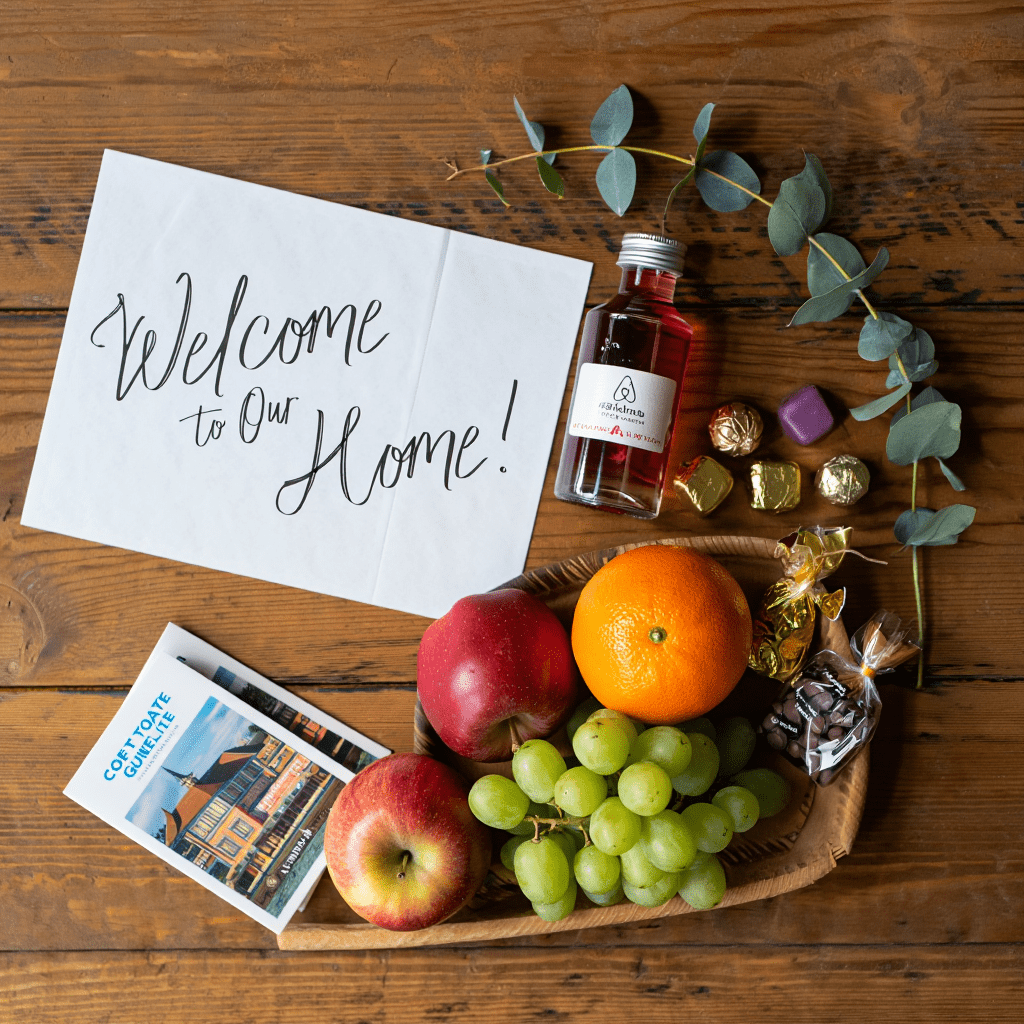
Minimalism had a good run. For a while, it read as intentional and clean. But somewhere along the way, it became shorthand for a landlord who spent as little as possible, threw in some white towels, and hoped for the best. Guests are picking up on that now and saying so publicly. The listings doing well in 2026 feel warm, considered, and genuinely comfortable. Like someone actually thought about what it would be like to stay there.
Getting that feeling does not require a big budget. It requires a bit of intention.
Start with the windows. Horizontal blinds are one of the first things guests notice when they walk into a space, and they read as dated and impersonal. Blackout curtains with some texture to them photograph better and make a real difference for guests trying to sleep in. It is a straightforward swap that pays off quickly.
Sort the bedding next. A fluffy duvet, four pillows per bed split between firm and soft, and a folded throw blanket at the foot, that combination photographs well and genuinely feels good to sleep in. Thin sheets and two flat pillows will show up in your reviews faster than almost anything else.
Bring something living into the room. Real plants work great if someone can water them between stays. High-quality faux plants are just as effective in listing photos and require nothing from you. Either way, a bit of greenery makes a space feel inhabited rather than staged.
Every bedside table needs two things: a warm lamp and a charging port guests can actually find without moving furniture. A 2700K bulb creates a relaxed, comfortable atmosphere. A visible charging spot is the kind of small detail that shows up in five-star reviews more often than you would expect.
One of the most useful Airbnb hosting tips for beginners that rarely gets talked about is this : the algorithm is not just looking at your review history. It is watching what you do every single day.
Airbnb’s search in 2026 works more like a credit score than a simple ranking system. It rewards hosts who are consistently active and converting views into bookings. Your history matters less than it used to. What matters now is what you are doing today.
Log in every morning and adjust something on your calendar. Even moving one nightly rate by a dollar is enough. It signals to the algorithm that you are engaged and paying attention rather than someone who listed their property months ago and walked away. Active listings get pushed up. Quiet ones slide down.
During your launch phase, aim to respond to every inquiry within 15 minutes. Response speed is now a direct ranking factor, and in those early weeks when the platform is still deciding how much visibility to give your listing, a slow reply can quietly hurt your predicted satisfaction score. Once you have reviews and momentum behind you, there is more breathing room. At the start, take that window seriously.
Write a proper caption for every photo in your listing. Most hosts skip this entirely. The ones gaining real traction in 2026 are writing descriptions like “ergonomic workspace with 500 Mbps fibre connection” or “blackout curtains for late sleepers.” Airbnb’s search now uses AI to match listings to specific guest needs, and those captions feed directly into that process.
Pricing is where a lot of first-time hosts trip up, and the most common mistake in 2026 is still the same one a low nightly rate paired with a high cleaning fee and a checkout chore list sitting on top of it.
Here is the reality. Guests now see the full price before they book. A nightly rate of fifty dollars, next to a two-hundred-dollar cleaning fee does not feel like a deal. It feels like a trick. People are talking about it in forums, calling it out in reviews, and most importantly, clicking away without booking. Your total price needs to feel honest when you add everything together, not just when someone looks at the nightly figure on its own.
If you are charging a professional cleaning fee, your checkout message should say one thing. Lock the door and have a safe trip. That is it. Asking guests to strip the beds, run the dishwasher, and take the bins out after paying a substantial cleaning charge is a reliable way to turn an otherwise happy guest into a three-star review.
Automate your cleaning coordination. Tools like Hospitable and Turno connect your booking calendar directly to your cleaning team so that turnovers get scheduled the moment a reservation is confirmed. Trying to manage this manually is a risk you do not need to take. One missed turnover with a guest arriving in two hours is the kind of situation that generates the reviews you spend months trying to recover from.
Every Airbnb host guide worth reading will tell you the same thing about your launch window—it matters more than most people realise.
Airbnb gives new listings a visibility boost in search results for roughly the first two to four weeks. Come out of it with three to five strong reviews, and you have a real foundation to build on. Miss that window and your listing tends to settle into the lower pages of search results, and climbing back out takes time and effort.
Price yourself around 20 percent below the market rate when you first go live. Think of it as a marketing cost rather than a loss. Those early bookings are buying you the social proof the reviews that give future guests the confidence to book at your full price. Once that foundation is in place, raising your rates is simple.
Switch Instant Book on for your first month. Every extra step between a guest and a confirmed reservation is a moment where they might click away and book someone else. The algorithm also favours Instant Book listings because they convert reliably rather than just generating inquiries that go nowhere.
Before your first guest arrives, spend a night in the listing yourself. Sleep there. Use the shower. Cook something. You will find things you would never catch otherwise—the fridge that hums just loudly enough to disturb a light sleeper, the shower valve that takes five minutes to work out, and the morning light that pours onto the bed because the curtains do not quite meet in the middle. Catch those things before your guests do.
Running a short-term rental from a spreadsheet and a group chat with your cleaner has a ceiling, and most hosts hit it faster than they expect. The ones doing well in 2026 are running connected systems that handle the repetitive work automatically.
Dynamic pricing tools like PriceLabs or Wheelhouse monitor local demand, nearby events, and competitor rates and adjust your nightly prices in real time. Doing this manually means consistently undercharging when demand spikes and overpricing when things slow down.
A smart lock is not optional anymore. Guests in 2026 expect self-check-in as a baseline. Schlage Encode Plus and Yale Assure 2 are both reliable options that integrate well with most management platforms. Removing key handoffs also removes one of the most common friction points guests experience in the first ten minutes of a stay.
Noise monitoring devices like Minut or NoiseAware give you an early warning if sound levels start climbing. They detect volume rather than recording anything, so you stay within guest privacy boundaries while still being able to respond before a situation escalates. If you have neighbours nearby, this is worth having.
If reading through all of this makes the idea of managing everything yourself feel like more than you want to take on, that is a completely fair response. Staying on top of the algorithm, coordinating cleaners, managing guest communication around the clock, and adjusting pricing for local events done properly, it is close to a part-time job.
Stayfinity is an Airbnb management company that takes all of that off your plate. From listing setup and professional photography to dynamic pricing, 24/7 guest communication, and five-star cleaning coordination, every part of the hosting experience is handled so you can focus on the income without the stress. As one of the more hands-on Airbnb management companies in Ontario, Stayfinity works with property owners across the GTA and beyond, whether you are listing your first property or trying to get more out of an existing one.
Get in touch with Stayfinity today to request a visit and find out what your property could really be earning.
Call us on +1 (647) 691 3272 or email us at info@stayfinity.net to get started.
Create an account, set up your listing with quality photos and an honest description, set your pricing, and enable Instant Book. Make sure your space is clean, well-stocked, and guest-ready before you go live.
Earnings vary by location, property size, and occupancy rate. Most hosts in markets like Toronto or Mississauga earn between $2,000 and $6,000 per month, but pricing strategy and listing quality play a big role in your actual returns.
Stock essentials like fresh towels, toilet paper, coffee, and basic kitchen supplies. Do a full walkthrough, test all appliances, and spend one night in the space yourself to catch anything a guest might notice before they do.
Price 20 percent below your local market rate during your first month to attract early bookings. Deliver a genuinely great experience, communicate promptly, and most satisfied guests will leave a review without needing to be asked.
Respond fast, price competitively at launch, keep the space spotless, and take your listing photos seriously. Your first five reviews will define how your listing performs for months, so treat early guests like your most important ones.
The algorithm rewards active hosts who respond quickly, update their calendars regularly, and convert inquiries into bookings. New listings get a short visibility boost, so your activity and response rate in the first few weeks matter most.
If managing guest communication, pricing, cleaning, and maintenance feels like too much to handle yourself, working with an Airbnb management company makes sense. They handle every part of the operation, so you earn income without the day-to-day stress.
There is no straight answer to the best pricing strategy. Pricing strategies vary based on market, competition, season, amenities, etc. Dynamic pricing tools are a good way to start and then build on the dynamic pricing depending on various different factors and trigger points such weekdays vs weekend, peak season vs off season, unique amenities such pool, hot tub etc, overall market occupancy, demand etc .
Aim for at least 25 professional photos covering every room, key amenities, and at least one lifestyle shot. Quality matters more than quantity. Properly staged images convert browsers into bookings far more effectively than dark or cluttered photos.